


As a supplier of Water Heating Tubular Heaters, I often receive inquiries from customers in various regions, including those in high - altitude areas. The question of whether our water heating tubular heaters can be used in high - altitude areas is a valid one, and it's essential to understand the scientific principles behind it to provide an accurate answer.
Understanding the characteristics of high - altitude areas
High - altitude areas are characterized by lower atmospheric pressure compared to sea - level regions. As altitude increases, the air becomes thinner, and the atmospheric pressure drops. For every 1000 meters increase in altitude, the atmospheric pressure decreases by approximately 10 kPa. This change in pressure has a significant impact on the physical properties of substances, especially water.
At high altitudes, the boiling point of water is lower than at sea level. At sea level, water boils at 100°C under standard atmospheric pressure (101.325 kPa). However, at an altitude of 3000 meters, where the atmospheric pressure is around 70 kPa, water boils at approximately 90°C. This reduction in the boiling point is due to the fact that less energy is required to overcome the lower atmospheric pressure and convert water from a liquid to a gaseous state.

Working principle of water heating tubular heaters
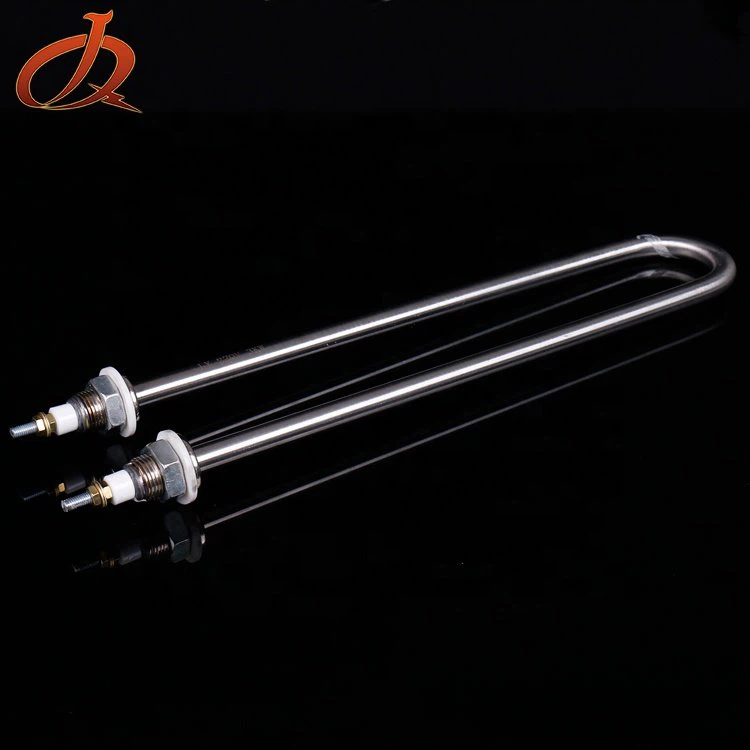
Water heating tubular heaters are designed to heat water by converting electrical energy into heat energy. They typically consist of a metal tube, usually made of stainless steel, with a heating element inside. When an electric current passes through the heating element, it generates heat, which is then transferred to the surrounding water through the metal tube.
The performance of a water heating tubular heater is mainly determined by its power rating and the heat transfer efficiency. The power rating indicates the amount of electrical energy the heater can convert into heat per unit time, usually measured in watts. The heat transfer efficiency depends on factors such as the material of the tube, the surface area of the tube in contact with water, and the flow rate of water around the tube.
Impact of high - altitude conditions on water heating tubular heaters
Boiling point reduction
The most obvious impact of high - altitude conditions on water heating tubular heaters is the reduced boiling point of water. Since the heater is designed to heat water to a certain temperature, the lower boiling point at high altitudes means that the water will reach the boiling state at a lower temperature than at sea level. This can lead to the heater reaching its set temperature more quickly, but it also means that the maximum temperature the water can reach is limited.
For example, if a heater is set to heat water to 95°C at sea level, it may not be able to reach this temperature at high altitudes because the water will boil at a lower temperature. This can be a problem for applications that require water to be heated to a specific high temperature, such as in some industrial processes or in high - temperature water supply systems.
Heat transfer efficiency
The lower atmospheric pressure at high altitudes can also affect the heat transfer efficiency of the water heating tubular heater. The heat transfer between the heater tube and the water occurs mainly through convection. In a lower - pressure environment, the density of the water and the air around the heater is lower, which can reduce the convective heat transfer coefficient.
A lower convective heat transfer coefficient means that the heat transfer rate from the heater tube to the water is slower. As a result, the heater may take longer to heat the water to the desired temperature, and its overall efficiency may be reduced. This can lead to increased energy consumption and longer heating times.
Electrical performance
In addition to the thermal effects, the electrical performance of the water heating tubular heater may also be affected by high - altitude conditions. The lower air density at high altitudes can reduce the dielectric strength of the air around the electrical components of the heater. This means that there is a higher risk of electrical arcing and short - circuits, especially in high - voltage applications.
Moreover, the reduced air density can also affect the cooling of the electrical components. Since air is a common cooling medium for electrical devices, the lower air density at high altitudes means that the cooling effect is weaker. This can cause the electrical components to overheat, which may damage the heater and reduce its lifespan.
Adaptability of our water heating tubular heaters to high - altitude areas
Despite the challenges posed by high - altitude conditions, our water heating tubular heaters can still be used in high - altitude areas with some considerations.
Temperature control adjustment
Our heaters are equipped with advanced temperature control systems that can be adjusted according to the local altitude and boiling point of water. By setting the appropriate temperature limit, the heater can operate safely and efficiently in high - altitude areas. For example, if the boiling point of water at a certain high - altitude location is 90°C, the temperature control system can be set to stop heating when the water reaches 85°C to avoid over - heating and boiling dry.
Heat transfer optimization
To compensate for the reduced heat transfer efficiency at high altitudes, we have optimized the design of our water heating tubular heaters. We use high - quality stainless steel tubes with a large surface area to increase the contact area between the heater and the water. Additionally, we have improved the internal structure of the heater to enhance the flow of water around the tube, which helps to improve the convective heat transfer coefficient.
Electrical safety design
To ensure the electrical safety of our heaters in high - altitude areas, we have adopted special insulation materials and electrical protection measures. The electrical components are encapsulated in a high - quality insulating material to prevent electrical arcing and short - circuits. We also install over - temperature and over - current protection devices to ensure that the heater shuts down automatically in case of abnormal conditions.
Product recommendations for high - altitude areas
For customers in high - altitude areas, we recommend our Double U Shape Stainless Steel Heating Tube and U Shape Stainless Steel Heater. These products are specifically designed to meet the requirements of high - altitude applications.
The double U - shape design of the heating tube increases the surface area in contact with water, which improves the heat transfer efficiency. The stainless steel material provides excellent corrosion resistance and durability, ensuring a long service life even in harsh high - altitude environments. The U - shape stainless steel heater is also a popular choice, as it offers a compact and efficient heating solution.
Conclusion
In conclusion, while high - altitude conditions pose some challenges to the use of water heating tubular heaters, our products can be effectively used in these areas with appropriate adjustments and optimizations. We understand the unique requirements of high - altitude applications and have developed solutions to ensure the safe and efficient operation of our heaters.
If you are located in a high - altitude area and are in need of a reliable water heating tubular heater, we invite you to contact us for more information and to discuss your specific needs. Our team of experts is ready to provide you with professional advice and customized solutions. You can explore our Water Heating Tubular Heater product range on our website to learn more about our offerings.
References
- "Fundamentals of Heat and Mass Transfer" by Frank P. Incropera, David P. DeWitt, Theodore L. Bergman, and Adrienne S. Lavine.
- "Thermodynamics: An Engineering Approach" by Yunus A. Cengel and Michael A. Boles.
- "Electrical Engineering: Principles and Applications" by Allan R. Hambley.