


Hey there! As a supplier of Quartz Boats, I've had my fair share of experiences and insights into these nifty little tools. One question that often pops up is, "How does the hardness of a Quartz Boat affect its use?" Well, let's dive right in and find out.
First off, let's talk about what quartz is. Quartz is a mineral composed of silicon and oxygen atoms, and it's known for its remarkable properties. When it comes to Quartz Boats, hardness is a key factor that can make or break their performance.
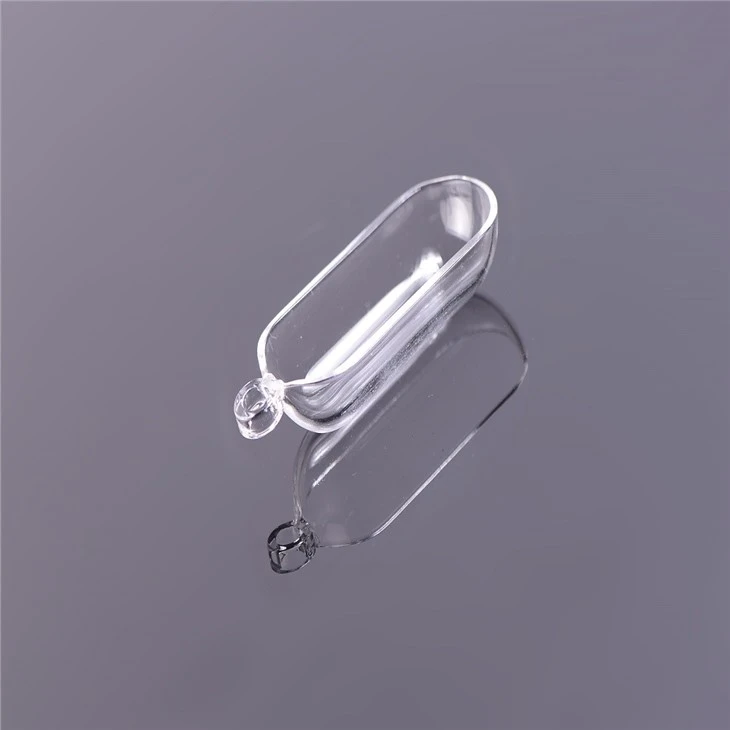

The hardness of a Quartz Boat is typically measured on the Mohs scale. Quartz ranks 7 on this scale, which means it's pretty darn hard. This hardness gives Quartz Boats several advantages in various applications.
One of the main benefits of a hard Quartz Boat is its durability. In industries where high - temperature processes are involved, like semiconductor manufacturing or research laboratories, the Quartz Boat needs to withstand a lot of wear and tear. For example, when you're using it in a furnace for annealing or diffusion processes, the boat is exposed to extreme heat and potentially corrosive gases. A hard Quartz Boat can resist scratches and abrasions that might occur during handling or when it comes into contact with other materials. This means it can be used multiple times without significant degradation, saving you both time and money in the long run.
Another aspect where hardness plays a crucial role is in maintaining the shape of the Quartz Boat. In processes such as chemical vapor deposition (CVD), the boat needs to hold its form precisely. If the boat were too soft, it could deform under the weight of the samples or due to the high - temperature environment. A hard Quartz Boat retains its shape, ensuring that the samples are held in the correct position and that the deposition process is consistent across all samples. This is vital for producing high - quality semiconductor chips or other precision components.
The hardness also affects the chemical resistance of the Quartz Boat. Since quartz is a relatively inert material, a hard Quartz Boat can better resist chemical attacks. In applications where strong acids or bases are used, a soft boat might start to dissolve or react with the chemicals, which could contaminate the samples. On the other hand, a hard Quartz Boat provides a stable and chemically resistant platform for your experiments or manufacturing processes.
However, the hardness of a Quartz Boat isn't all sunshine and rainbows. There are also some potential drawbacks. For instance, a very hard Quartz Boat can be brittle. If it's subjected to sudden temperature changes or mechanical shocks, it might crack. This is a significant concern, especially in processes where the boat is rapidly heated and cooled. You need to be extra careful when handling and using hard Quartz Boats to avoid any damage.
When it comes to different types of applications, the ideal hardness of a Quartz Boat can vary. In some cases, a slightly softer quartz might be preferred. For example, if you're using the boat for less - demanding applications where you need a bit more flexibility, a softer Quartz Boat could be a better choice. It might be easier to machine into custom shapes and could be less prone to cracking under certain conditions.
In contrast, for high - end semiconductor manufacturing or research applications where precision and durability are of the utmost importance, a harder Quartz Boat is usually the way to go. These boats can withstand the harsh conditions and provide consistent performance over time.
Now, let's talk about how the hardness of a Quartz Boat compares to other quartz products. If you're also interested in Quartz Flask, the requirements for hardness might be different. Flasks are often used for storing and mixing chemicals, so they need to be chemically resistant but might not need to be as hard as a Quartz Boat. Similarly, Quartz Tube has its own set of requirements. Tubes are often used for transporting gases or liquids, and their hardness needs to be balanced with other properties like flexibility and transparency.
As a Quartz Boat supplier, I understand the importance of getting the hardness right for your specific needs. We offer a range of Quartz Boats with different hardness levels to suit various applications. Whether you're a small research lab or a large - scale manufacturing facility, we can help you find the perfect Quartz Boat for your requirements.
If you're in the market for a Quartz Boat or have any questions about how hardness might affect your use, don't hesitate to reach out. We're here to provide you with the best products and advice to ensure your processes run smoothly. You can check out our Quartz Boat offerings on our website and see which one is the right fit for you.
In conclusion, the hardness of a Quartz Boat has a significant impact on its use. It affects durability, shape retention, chemical resistance, and more. While a hard boat offers many advantages, it also has some potential drawbacks. By understanding your specific application and working with a knowledgeable supplier, you can choose the Quartz Boat with the ideal hardness for your needs. So, if you're looking to take your manufacturing or research processes to the next level, consider the hardness of your Quartz Boat and how it can make a difference.
References
- Mineralogy textbooks on quartz properties
- Industry reports on semiconductor manufacturing processes involving quartz products
- Research papers on the chemical and physical properties of quartz in high - temperature applications