


Hey there! As a supplier of Quartz Boats, I often get asked about the electrical conductivity of these nifty pieces of equipment. So, I thought I'd dive into this topic and share what I know with you all.
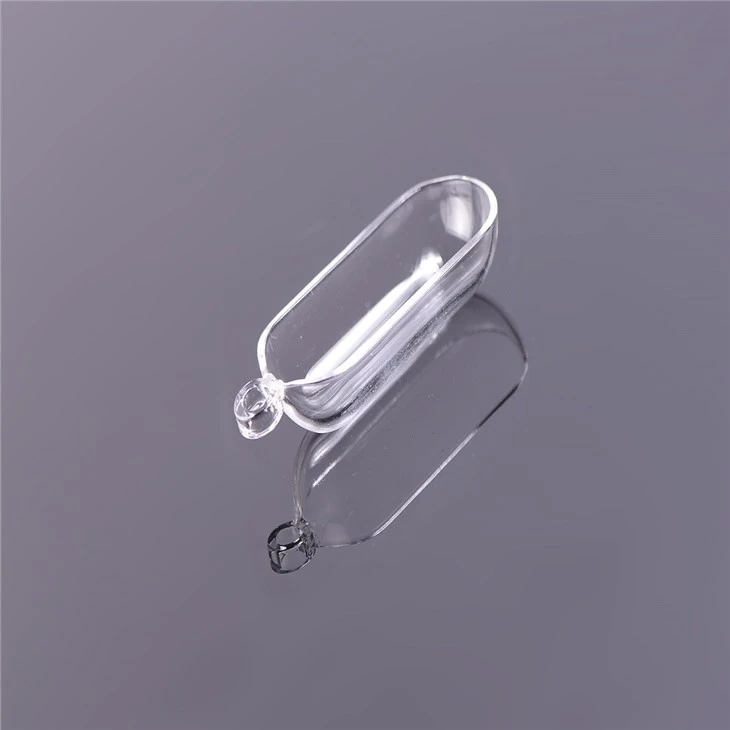
First off, let's talk a bit about what a Quartz Boat is. If you're not familiar, you can check out Quartz Boat on our website for more details. Quartz Boats are made from high - purity quartz material. They're widely used in semiconductor manufacturing, laboratory experiments, and other high - tech industries because of their excellent thermal stability and chemical resistance.
Now, to the main question: What is the electrical conductivity of a Quartz Boat? Well, quartz is a type of insulator. In simple terms, it doesn't conduct electricity very well. The electrical conductivity of quartz is extremely low. This is due to its atomic structure. Quartz is made up of silicon and oxygen atoms arranged in a very stable crystalline structure. In this structure, the electrons are tightly bound to the atoms and are not free to move around easily.
For a material to conduct electricity, it needs to have free electrons that can move in response to an electric field. In metals, for example, there are a large number of free electrons, which is why metals are good conductors. But in quartz, the electrons are held in place by strong covalent bonds between the silicon and oxygen atoms.
The electrical conductivity of quartz can be affected by a few factors. Temperature is one of the key factors. At room temperature, the electrical conductivity of quartz is on the order of about 10⁻¹⁷ to 10⁻¹⁵ S/cm (siemens per centimeter). As the temperature increases, the conductivity also increases slightly. This is because at higher temperatures, some of the electrons gain enough energy to break free from their bonds and become mobile. However, even at relatively high temperatures, the conductivity of quartz remains very low compared to conductors like metals.

Impurities in the quartz can also have an impact on its electrical conductivity. If there are trace amounts of other elements in the quartz, these impurities can introduce additional electrons or create "holes" (a lack of electrons) in the crystal structure. This can increase the conductivity of the quartz. But in high - purity quartz used for making Quartz Boats, the impurity levels are kept extremely low to maintain the insulating properties.
Another interesting thing to note is that different types of quartz can have slightly different electrical conductivities. For example, fused quartz, which is made by melting and then cooling quartz, may have different conductivity characteristics compared to natural quartz. Fused quartz often has a more uniform structure, which can result in more predictable electrical properties.
So, why is the low electrical conductivity of Quartz Boats so important? In semiconductor manufacturing, for instance, you need a material that won't interfere with the electrical signals being processed in the chips. Quartz Boats provide a stable and non - conductive environment for the semiconductor wafers during various processes like diffusion, oxidation, and annealing. In laboratory experiments, especially those involving electrical measurements, the low conductivity of Quartz Boats ensures that they don't introduce any unwanted electrical noise or interference.
If you're also interested in other quartz products, we have Quartz Flask and Quartz Tube available on our website. These products also share some of the same properties as Quartz Boats, such as high thermal stability and low electrical conductivity.
In summary, the electrical conductivity of a Quartz Boat is extremely low, making it an excellent insulator. This property is crucial for its applications in high - tech industries. Whether you're in semiconductor manufacturing or running a laboratory experiment, the low conductivity of Quartz Boats helps ensure the accuracy and reliability of your processes.
If you're in the market for Quartz Boats or other quartz products, and you have any questions or want to discuss a potential purchase, don't hesitate to reach out. We're here to help you find the right solution for your needs.
References
- Solid State Physics textbooks
- Research papers on quartz materials and their properties