


The friction coefficient is a fundamental physical parameter that describes the interaction between two surfaces in contact. When it comes to a Quartz Boat, understanding its friction coefficient is crucial for various applications, especially in industries where precision and reliability are paramount. As a leading supplier of Quartz Boat, we are committed to providing in - depth knowledge about this essential product.
Understanding the Friction Coefficient
The friction coefficient, denoted as μ, is defined as the ratio of the frictional force (F) between two surfaces to the normal force (N) pressing them together, i.e., μ = F/N. There are two main types of friction coefficients: static friction coefficient (μs) and kinetic friction coefficient (μk). The static friction coefficient represents the maximum frictional force that must be overcome to start the relative motion between two surfaces at rest. Once the motion begins, the kinetic friction coefficient comes into play, which is usually smaller than the static friction coefficient.
Factors Affecting the Friction Coefficient of a Quartz Boat
- Surface Roughness: The surface finish of a Quartz Boat can significantly influence its friction coefficient. A smoother surface generally has a lower friction coefficient. During the manufacturing process, we use advanced polishing techniques to achieve a high - quality surface finish for our Quartz Boats. This not only reduces friction but also minimizes the risk of particle contamination, which is crucial in semiconductor and other high - precision industries.
- Material Purity: The purity of the quartz material used in the Quartz Boat also affects the friction coefficient. Impurities in the quartz can change the surface properties and increase the friction. Our Quartz Boats are made from high - purity quartz, ensuring consistent and low friction coefficients.
- Contact Material: The friction coefficient of a Quartz Boat depends on the material it is in contact with. For example, when in contact with a metal surface, the friction coefficient may be different from when it is in contact with another quartz surface. Different contact materials have different surface energies and micro - structures, which interact with the Quartz Boat surface in various ways.
Measuring the Friction Coefficient of a Quartz Boat
Measuring the friction coefficient of a Quartz Boat typically involves a specialized friction testing device. A common method is to use a tribometer, which can apply a known normal force to the Quartz Boat and measure the frictional force as it moves relative to another surface. By repeating the measurement multiple times under different conditions, we can obtain accurate and reliable values for the static and kinetic friction coefficients.
Applications and the Significance of the Friction Coefficient
- Semiconductor Manufacturing: In semiconductor manufacturing, Quartz Boats are used to hold semiconductor wafers during various processes such as diffusion, oxidation, and chemical vapor deposition. A low and consistent friction coefficient is essential to ensure smooth handling of the wafers. High friction can cause scratches on the wafers, leading to defects and reduced product yields. Our Quartz Boats, with their well - controlled friction coefficients, help semiconductor manufacturers achieve higher production efficiency and better product quality.
- Laboratory Research: In laboratory settings, Quartz Boats are often used for sample handling and heating. The friction coefficient affects how easily samples can be placed and removed from the boat. A suitable friction coefficient ensures that samples stay in place during experiments while also allowing for easy retrieval at the end of the process.
Comparison with Other Quartz Products
When comparing the friction coefficient of a Quartz Boat with other quartz products like Quartz Tube and Quartz Flask, there are some differences. Quartz Tubes are mainly used for gas or liquid flow, and their friction coefficient may be more relevant in terms of internal flow resistance. Quartz Flasks are used for chemical reactions and storage, and their friction coefficient is important when considering the ease of pouring and cleaning. Each product's design and application requirements lead to different optimization of the friction coefficient.
Our Commitment as a Supplier
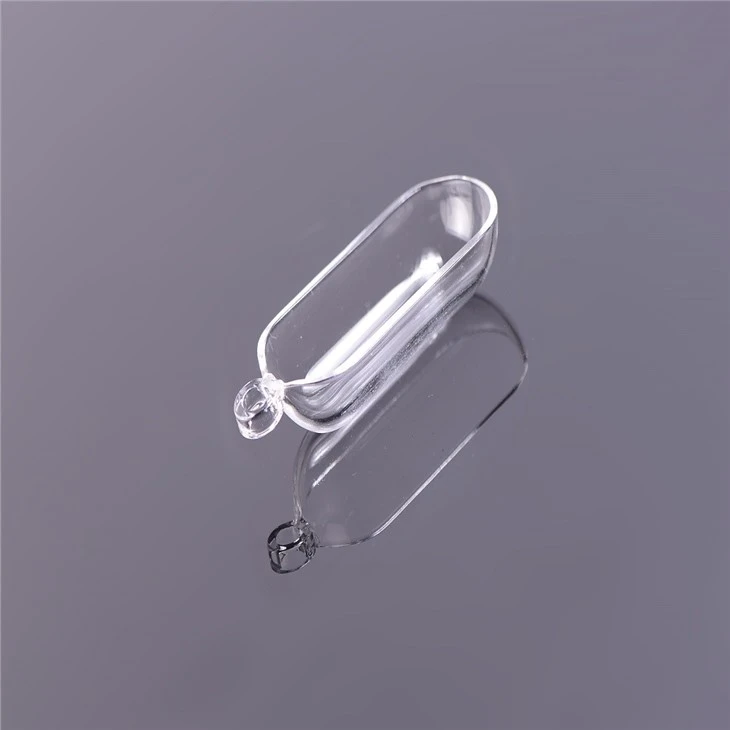
As a Quartz Boat supplier, we understand the importance of the friction coefficient in different applications. We conduct rigorous quality control tests on every Quartz Boat we produce to ensure that the friction coefficient meets the required standards. Our R & D team is constantly working on improving the manufacturing process to further optimize the friction coefficient and other performance parameters of our products.

Contact Us for Purchase and Consultation
If you are in need of high - quality Quartz Boats with well - controlled friction coefficients for your specific applications, we invite you to contact us. Our experienced sales team is ready to provide you with detailed product information, answer your questions, and assist you in the procurement process. Whether you are in the semiconductor industry, laboratory research, or other fields, we can offer you the most suitable Quartz Boat solutions.
References
- Bowden, F. P., & Tabor, D. (1950). The Friction and Lubrication of Solids. Oxford University Press.
- Bhushan, B. (2013). Principles and Applications of Tribology. Wiley.
- Ruff, A. W., & Ives, L. K. (1980). Friction, Wear, and Lubrication: A Guide to Designers and Engineers. Marcel Dekker.