


Hey there! As a supplier of Quartz Tube, I often get asked about the viscoelastic property of quartz tubes. So, I thought I'd write a blog post to share what I know and clear up any confusion.
First off, let's talk about what viscoelasticity is. In simple terms, viscoelasticity is a property of materials that combines both viscous and elastic characteristics. Viscous materials, like honey, flow when a force is applied and don't return to their original shape. Elastic materials, on the other hand, deform when a force is applied but return to their original shape once the force is removed. Viscoelastic materials do a bit of both. They deform under force and can gradually return to their original shape over time.
Now, let's dive into the viscoelastic property of quartz tubes. Quartz is a crystalline form of silicon dioxide (SiO₂), and it has some pretty unique properties. One of these properties is its viscoelastic behavior, which becomes more apparent at high temperatures.
At room temperature, quartz tubes are highly elastic. They can withstand a certain amount of stress without permanent deformation. For example, if you gently bend a quartz tube within its elastic limit, it will spring back to its original shape once you release the force. This elasticity is due to the strong covalent bonds between the silicon and oxygen atoms in the quartz crystal structure.
However, as the temperature increases, the viscoelastic nature of quartz tubes becomes more pronounced. At high temperatures, the atoms in the quartz lattice gain more energy and can move more freely. This allows the quartz tube to flow slowly under a constant load, similar to a viscous fluid. This phenomenon is known as creep.
Creep is an important consideration when using quartz tubes in high-temperature applications. For instance, in a furnace where quartz tubes are used to hold samples or as reaction chambers, the tubes may be subjected to a constant load over a long period of time. If the temperature is high enough, the tubes may gradually deform due to creep. This can affect the accuracy of experiments or the performance of the equipment.
To understand the viscoelastic behavior of quartz tubes better, scientists use a concept called the relaxation time. The relaxation time is the time it takes for a viscoelastic material to recover a certain percentage of its original shape after a deformation. In the case of quartz tubes, the relaxation time increases with temperature. At very high temperatures, the relaxation time can be extremely long, meaning that the tube may take a long time to return to its original shape after being deformed.
Another factor that affects the viscoelastic property of quartz tubes is the purity of the quartz. High-purity quartz tubes generally have better viscoelastic properties than tubes with lower purity. Impurities in the quartz can disrupt the crystal structure and weaken the bonds between the atoms, making the tube more prone to deformation.
As a Quartz Tube supplier, I understand the importance of providing high-quality tubes that can withstand the rigors of high-temperature applications. That's why we carefully select the raw materials and use advanced manufacturing processes to ensure the purity and quality of our quartz tubes.
Now, let's talk about some of the applications of quartz tubes and how their viscoelastic property plays a role.
One of the most common applications of quartz tubes is in the semiconductor industry. Quartz tubes are used as reaction chambers in chemical vapor deposition (CVD) processes, where thin films are deposited on semiconductor wafers. In these processes, the quartz tubes are exposed to high temperatures and reactive gases. The viscoelastic property of the quartz tubes allows them to withstand the thermal stress and maintain their shape during the deposition process.

Quartz tubes are also widely used in the lighting industry. In halogen lamps and high-intensity discharge (HID) lamps, quartz tubes are used to enclose the filament or the arc. The elasticity of the quartz tubes helps to protect the delicate components inside the lamp from mechanical shock, while the high-temperature resistance allows the tubes to withstand the heat generated by the lamp.
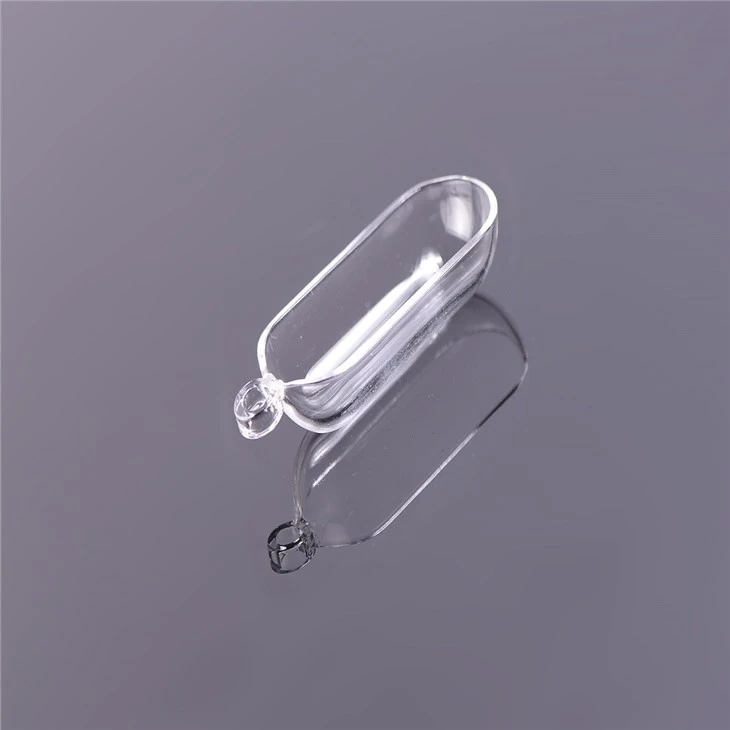
In addition to Quartz Tube, we also offer other quartz products such as Quartz Flask and Quartz Boat. These products also have excellent viscoelastic properties and are suitable for a variety of applications.
If you're in the market for high-quality Quartz Tube, Quartz Flask, or Quartz Boat, I'd love to hear from you. Whether you're a researcher, a manufacturer, or someone looking for a specific quartz product, we can provide you with the right solution. Contact us today to discuss your requirements and let's start a conversation about how we can work together.
In conclusion, the viscoelastic property of quartz tubes is a fascinating and important characteristic that affects their performance in various applications. By understanding this property, we can make better decisions when using quartz tubes in high-temperature and high-stress environments. I hope this blog post has given you a better understanding of the viscoelastic property of quartz tubes and how it relates to their practical use.
References
- "Introduction to Materials Science for Engineers" by James F. Shackelford
- "High-Temperature Materials and Their Applications" by Richard A. Rapp