


As a supplier of cartridge heaters, I've witnessed firsthand the critical role these heating elements play in chemical processing. Chemical processing involves a wide range of operations, from simple heating of raw materials to complex reactions at precise temperatures. Cartridge heaters are often the go - to choice for these applications due to their efficiency, precision, and reliability. In this blog, I'll delve into the requirements for cartridge heaters in chemical processing.
Temperature Accuracy
One of the most crucial requirements for cartridge heaters in chemical processing is temperature accuracy. Chemical reactions are highly sensitive to temperature changes. Even a slight deviation from the optimal temperature can lead to incomplete reactions, the formation of unwanted by - products, or even safety hazards.
For example, in the production of polymers, the polymerization reaction occurs within a specific temperature range. If the temperature is too low, the reaction may not proceed at the desired rate, resulting in a polymer with inferior properties. On the other hand, if the temperature is too high, the polymer may degrade or form cross - links in an uncontrolled manner.
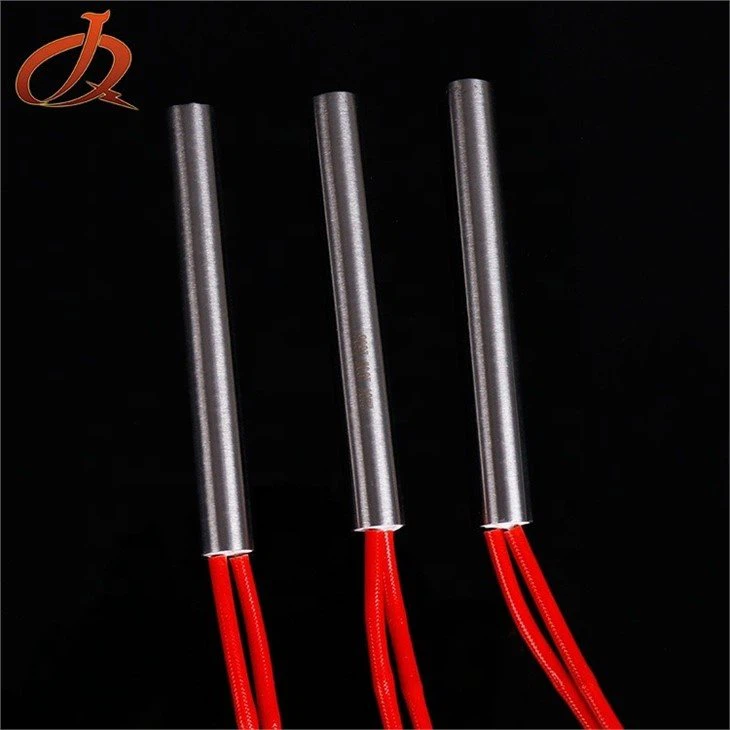
Our Electric Injection Mold Cartridge Heater is designed to provide precise temperature control. It uses advanced temperature sensors and control systems to maintain the set temperature within a narrow tolerance. This ensures that chemical processes can be carried out with high repeatability and quality.
Corrosion Resistance
Chemical processing environments are often harsh, with exposure to various corrosive chemicals such as acids, bases, and solvents. Cartridge heaters used in these environments must be able to withstand corrosion to ensure long - term reliability.
The materials used in the construction of the heater sheath are of utmost importance. Stainless steel is a popular choice due to its good corrosion resistance. However, for more aggressive chemical environments, specialized alloys such as Inconel or Hastelloy may be required. These alloys offer superior resistance to corrosion, oxidation, and high - temperature degradation.
Our Single End Screw Plug Electric Cartridge Heater is available with different sheath materials to meet the specific corrosion resistance requirements of chemical processing applications. The screw - plug design also allows for easy installation and removal, making it convenient for maintenance and replacement in case of corrosion damage.
Power Density
Power density is another important factor in chemical processing. It refers to the amount of power dissipated per unit area of the heater surface. A high power density is often required to achieve rapid heating or to maintain a high temperature in a short period.
However, excessive power density can lead to overheating of the heater surface, which may cause damage to the heater or affect the chemical process. Therefore, it is essential to select a cartridge heater with an appropriate power density for the specific application.
For smaller - scale chemical processing or applications where space is limited, our 12mm Electric Cartridge Heater offers a high power density in a compact size. It can quickly reach the desired temperature and provide efficient heating for various chemical reactions.
Safety Features
Safety is a top priority in chemical processing. Cartridge heaters should be equipped with safety features to prevent overheating, short - circuits, and other potential hazards.
Over - temperature protection is a common safety feature. It automatically shuts off the heater when the temperature exceeds a pre - set limit, preventing damage to the heater and the surrounding equipment. Ground fault protection is also important to protect against electrical shocks in case of a fault in the heater.
In addition, the heater should be designed to meet relevant safety standards and regulations. This ensures that the heater can be used safely in chemical processing facilities, reducing the risk of accidents and injuries.
Compatibility with Chemicals
The cartridge heater must be compatible with the chemicals used in the processing. Some chemicals may react with the heater materials, leading to corrosion, contamination, or other issues.
Before selecting a cartridge heater, it is necessary to consider the chemical composition of the process fluid and the potential interactions with the heater. This may involve consulting with chemical experts or referring to chemical compatibility charts.
For example, if the chemical process involves the use of strong acids, a heater with a highly acid - resistant sheath material should be selected. Our technical team can provide guidance on selecting the most suitable cartridge heater based on the specific chemical environment.

Longevity and Reliability
In chemical processing, downtime can be extremely costly. Therefore, cartridge heaters need to have a long service life and high reliability.
High - quality materials and advanced manufacturing processes are essential for ensuring the longevity of the heater. Regular maintenance and inspection can also help to detect and address potential issues before they cause significant problems.
We stand behind the quality of our cartridge heaters. Our products are rigorously tested to ensure they meet the highest standards of performance and reliability. We also offer after - sales support to help our customers with installation, maintenance, and troubleshooting.
Ease of Installation and Maintenance
Cartridge heaters should be easy to install and maintain. In chemical processing facilities, quick and easy installation can minimize downtime during equipment setup or replacement.
The design of the heater should allow for straightforward installation in the heating equipment. It should also be easy to access for maintenance and inspection. For example, heaters with removable sheaths or easy - to - replace components can significantly reduce maintenance time and costs.
Conclusion
In summary, the requirements for cartridge heaters in chemical processing are multifaceted. Temperature accuracy, corrosion resistance, power density, safety features, compatibility with chemicals, longevity, reliability, and ease of installation and maintenance are all important considerations.
As a cartridge heater supplier, we understand these requirements and are committed to providing high - quality products that meet the diverse needs of chemical processing applications. Whether you need a heater for a small - scale laboratory experiment or a large - scale industrial chemical process, we have the expertise and the product range to serve you.
If you're in the market for cartridge heaters for your chemical processing needs, we invite you to get in touch with us. Our team of experts can help you select the most suitable heater for your specific application and provide you with detailed information about our products and services. Let's work together to ensure the success of your chemical processing operations.
References
- Perry, R. H., & Green, D. W. (Eds.). (2007). Perry's Chemical Engineers' Handbook. McGraw - Hill.
- Schmidt, L. D. (2005). The Engineering of Chemical Reactions. Oxford University Press.